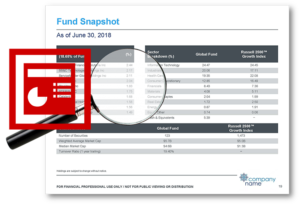
The Problem with PowerPoint and InDesign-based Content Automation (The “Save As” Phenomenon)


Recently, I wrote an article about why automating within desktop publishing environments can be a bad idea. When I talk about desktop publishing environments, I’m referring to programs like InDesign, PowerPoint, or Quark for content automation. If you’re looking for a way to effectively scale your literature production, you simply must say goodbye to your desktop defaults. And, I’ll tell you why.
This topic is front-of-mind for me today, following a meeting with a prospective client last week. This client described their frustration with their current automation solution. They told me a story about how their automation provider is currently supporting their suite of about 50 documents using about 50 InDesign templates. Even the client recognizes that this is a problem and knows that if the templates were being shared properly as shared entities then there should be, at most, eight of them for this catalog of documents. Fewer templates allow changes to be made centrally, without needing to apply a change 50 different times.
I smiled in sympathy as they told me about this problem. This is precisely the issue with automation solutions that are based on desktop publishing applications. This client articulated the issue even more simply and perfectly than I have in my past musings on the topic.
If a Microsoft or Adobe desktop publishing application is being used as the foundation of the automation solution, that system is then dependent on that desktop publishing tool, as well as the people who use the tool. It’s easy to overlook or dismiss this reality. People really love these programs, and understandably so. They are familiar, intuitive and your collateral is probably already designed in one of these formats. But, the hard truth is that almost always leads to bad long-term results in a commercial document production environment. This is due to what we call the “Save As Phenomenon”.Read More
Trends in Asset Management Marketing: What to Expect in 2017
 Last year, we published a blog on what to expect in asset management marketing in 2016. The post is based on an interview I conducted with Andrew Corn, CEO of E5A Integrated Marketing. During the interview, Andrew and I discussed how 2016 would be the year of transparency and immediacy; the year for asset managers to leverage data to improve segmentation and personalization, create more transparency in the sales process, and provide timely information to every audience, on every channel. At Synthesis Technology, we saw these predictions hold true. Many of our clients made significant improvements to their content delivery methods through strategic data and content automation.
So, what will be the new trends in 2017? How will firms embrace data and technology to be even more competitive?
Once again, I called upon Andrew to mine his brain for insights. He is the former CIO of Beacon Trust and Clear Asset Management, where he led the development of a multi-factor model to manage long-only equities. He has also designed ETFs and managed two hedge funds. Today, he helps firms leverage digital media and technology to grow sales through marketing and advertising, while adhering to industry regulations.
Here is part 1 (of 2) of our discussion on what to expect in asset management marketing in 2017. Read More
Business Rules: What They Are and Why You Need Them for Investment Marketing Content Automation
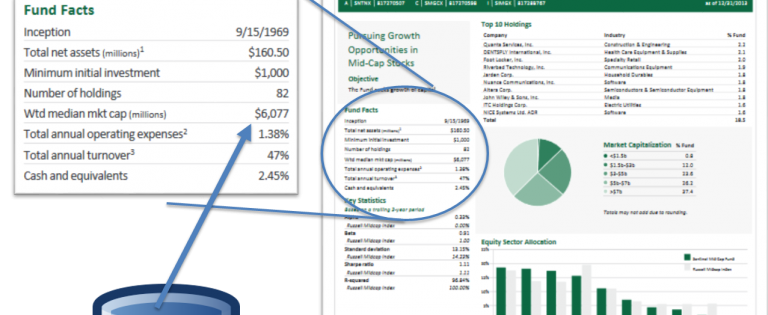
Hi, I’m Kim Rebecca. Throughout my career in the global asset management industry, I’ve had the opportunity to help facilitate data-heavy content automation. I’ve done this on thousands of regulatory documents, marketing collateral, presentations, web pages and so on. Actually, it’s probably hundreds of thousands. One of the key advantages of content automation is the accommodation of the ever-expanding scope of distribution. It allows product marketers such as myself to bolster their bragging rights. I’ve had the good fortune to help three global asset managers with their content automation efforts — prominent and well-recognized firms managing assets galore. I was thus somewhat surprised to find that a common challenge in the implementation phase of all of their automation was something seemingly basic: the identification and articulation of something called business rules.Read More
The Investment Management Marketing Conundrum

As is often the case, it’s what people do, rather than what they say, that’s most telling.
Let’s get this out of the way early.
If an investment manager
- does good work
- has responsive client service, and
- keeps a decent track record
then there is no reason why they should struggle to grow their assets under management.
If they do, then the problem is the marketing. Full. Stop.
But it’s not because investment management marketers don’t get it – they do. The problem is that marketing is either poorly understood or severely undervalued by the portfolio management team/firm management.Read More
-
 The Future of Asset Management Marketing: 8 Takeaways from Our Fireside Chat with CMO Lara Hoffmans, CFA
 -
7 Problems With Automating Factsheets In PowerPoint
-
The Growing Importance of ADA Compliance for Investment Companies
-
 Four, No FIVE things to Look for in a Content Automation Solution
 -
10 Best Practices for Tailored Shareholder Report Design
Video: Who is Synthesis?
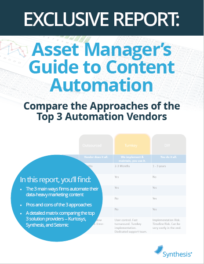 Compare the Top 3 Finserv Content Automation Vendors [White paper]
 Create Pitchbooks the Drive Sales [White paper]
 Build vs. Buy: Should Your Financial Services Firm Outsource or Insource Marketing Technology? [White paper]
  10 Tips for Rebranding your Fund Marketing Documents [White paper]